
Research
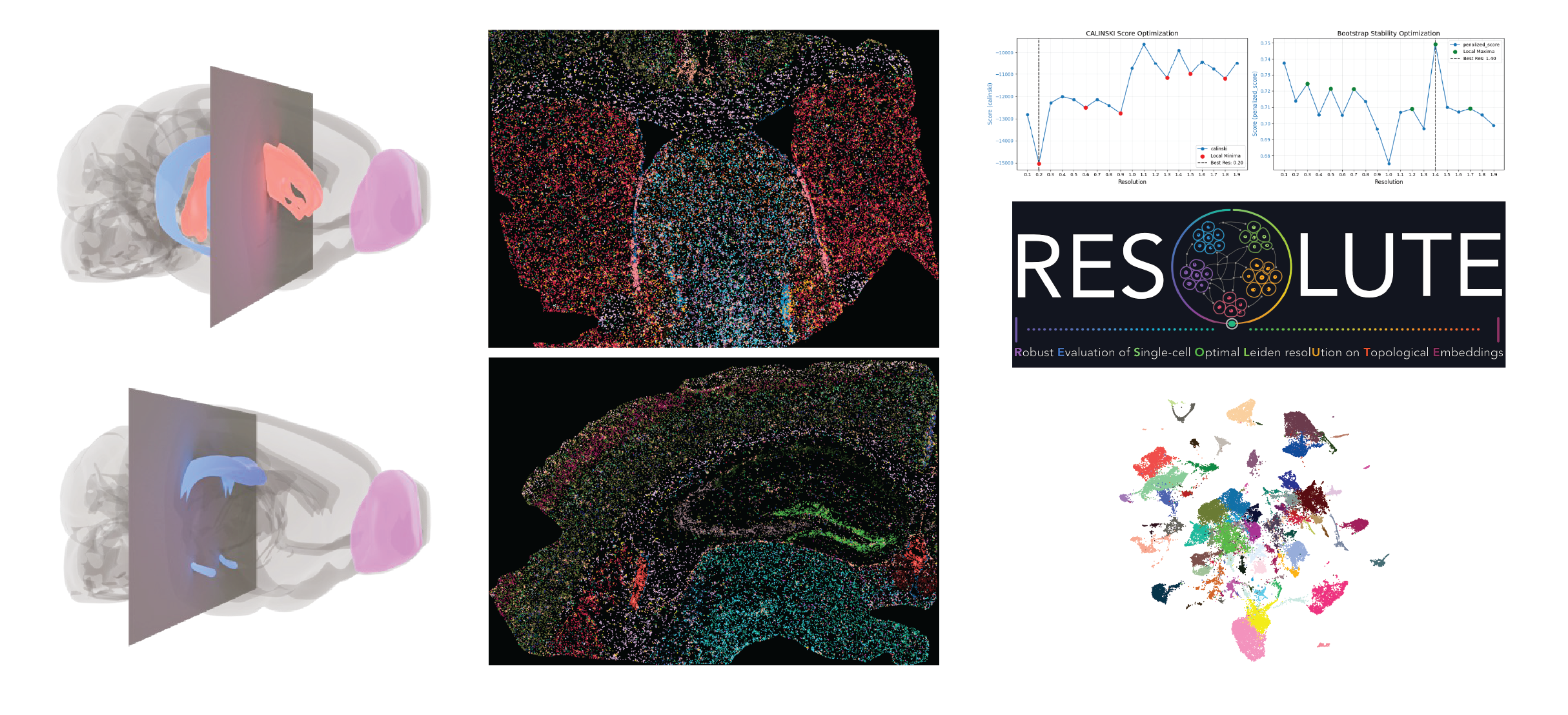
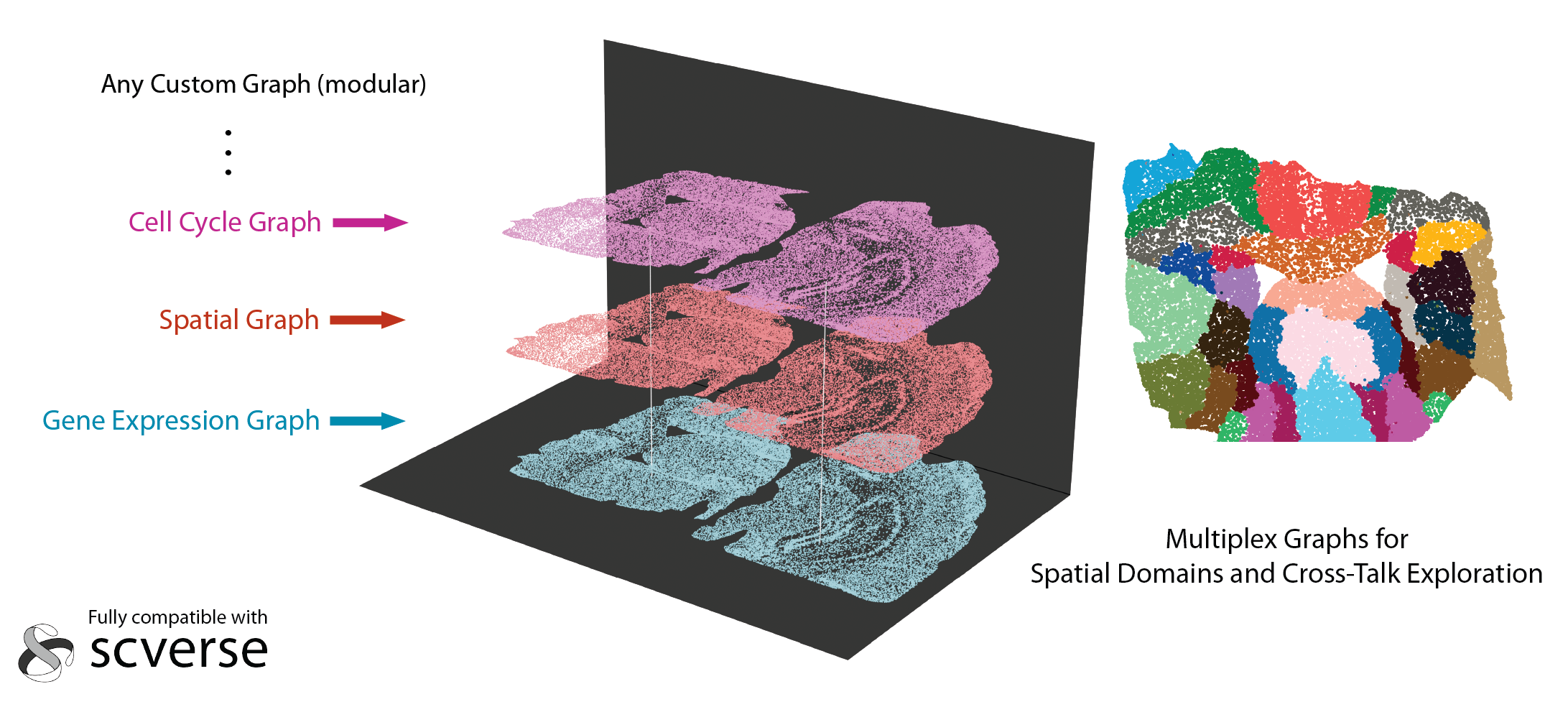
1. Build a brain Niche:StemCell interactome at unprecedented resolution
In the mouse brain, adult neurogenesis occurs in two main regions, the ventricular-subventricular zone lining the lateral ventricles (V-SVZ) and the dentate gyrus in the hippocampus (DG). There is a high regional diversity of NSC units or sub-populations in the (V-SVZ) and possibly in the dorsal versus ventral DG of the adult mouse brain. However, whether stem cells located in distinct domains are intrinsically different, or whether their regulation is mainly extrinsic with the niches themselves being regionalized, is still poorly understood.
2. Dissect the developmental origins of adult NSC heterogeneity
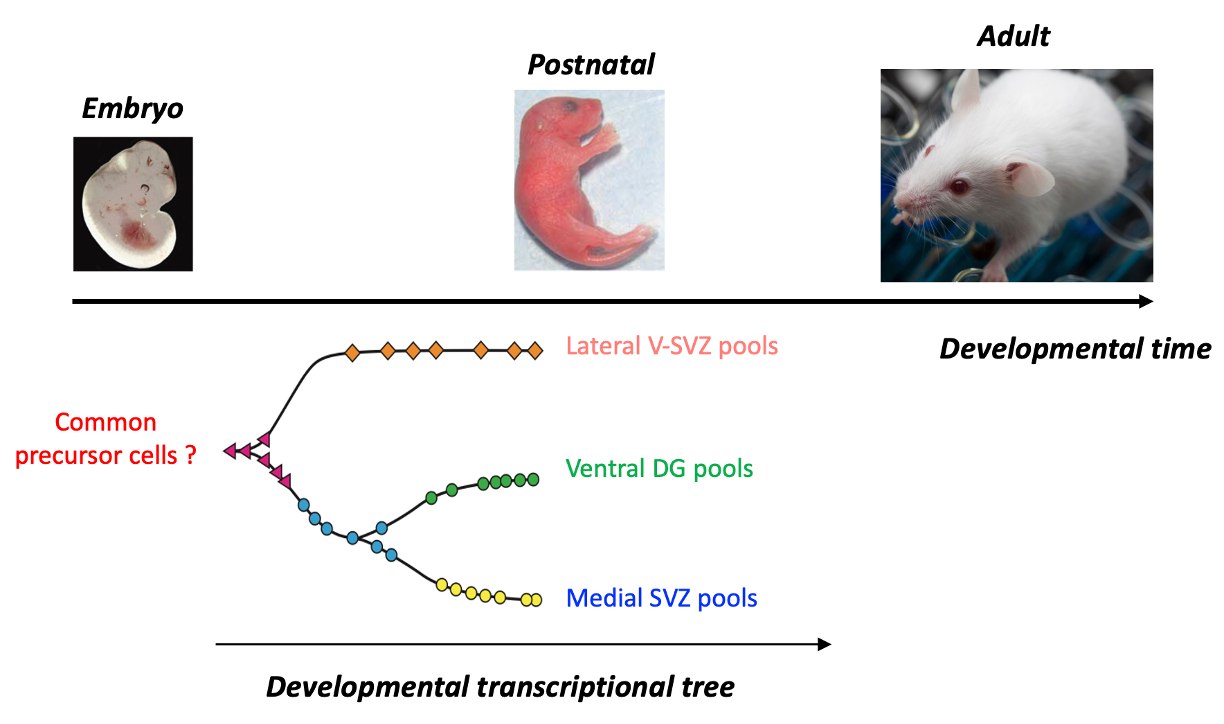
In mice, NSC regional identity is inherited from embryonic times and faithfully preserved in the adult. V-SVZ developmental and adult neurogenesis are not a continuous process. Instead, NSCs are set aside in a dormant state early in the embryo until needed in adulthood. In contrast, DG embryonic and adult NSCs derive from a common ancestor cell, supporting a model of continuous neurogenesis throughout development. Importantly, the molecular mechanisms underlying the transition from embryonic to adult stem cell identities across both niches are still unclear.
3. Reveal a circuit-level coordination of adult NSC behavior
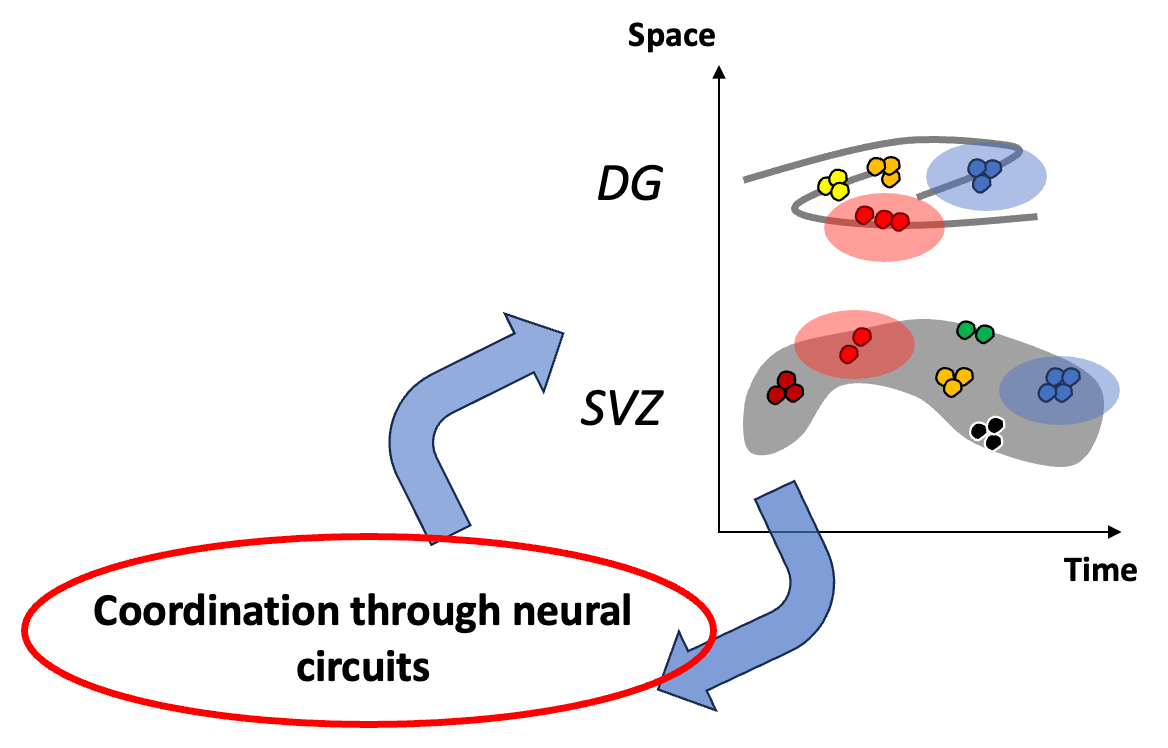
Recently, it was demonstrated that quiescent NSC pools in the adult V-SVZ are selectively recruited in response to physiological state, under control of targeted long-range neuronal innervation. Similarly, DG neurogenesis was shown to be directly responsive to distant hypothalamic projections, which play pivotal roles in fine tuning cell replacement dynamics under pathological contexts. These data strongly suggest a specific circuit regulation of NSC behavior in both niches.
4. Comparative analysis to better understand transient neurogenesis in mammals
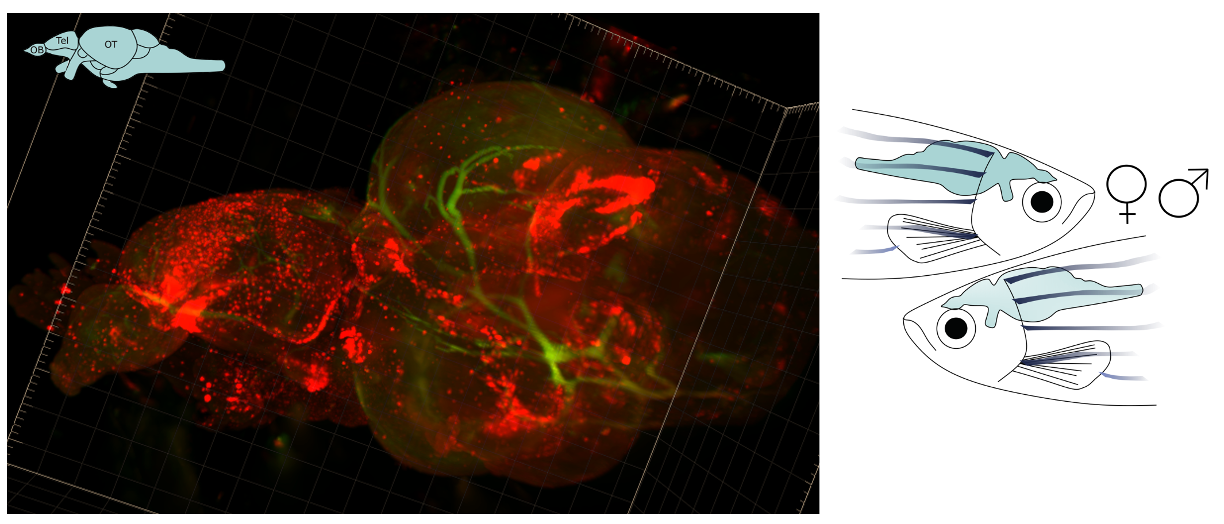
Besides constitutive neurogenesis, regionally-defined subpopulations of NSCs in the adult V-SVZ produce transient waves of functionally-relevant interneurons in response to physiological needs, such as pregnancy and motherhood. The question of whether specific NSCs are dedicated to generate behaviorally-relevant transient neurons, or whether they are the same as those sustaining continuous neurogenesis under homeostasis, is still totally unexplored. We hypothesize that transient neurogenesis in mammals is a powerful strategy favoring network plasticity and adaptability at the expense of growth and regeneration, and will test that by comparing Mouse and Zebrafish homologous neurogenic niches.
All
2024
2023
